0

Wear Strips & Wear Pads
Abrasion-Resistant Stock for Fabrication
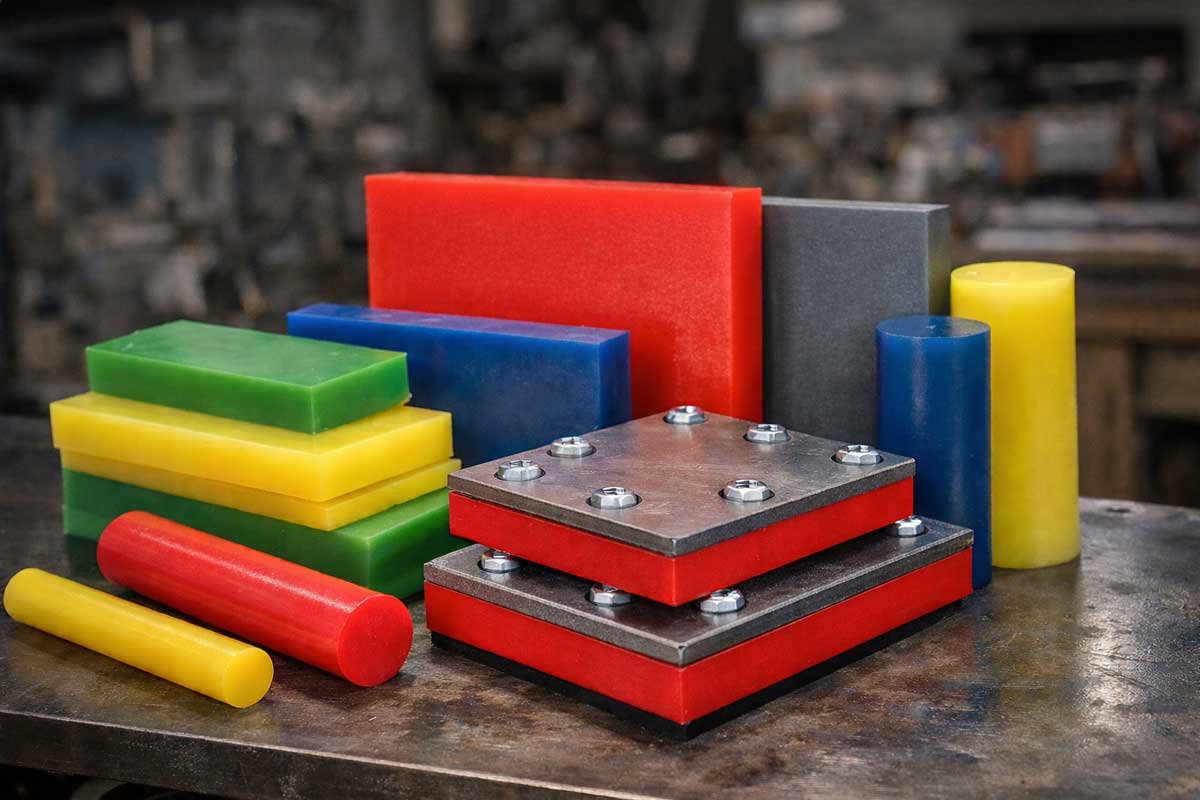
Urethane wear strips and pads are durable protective components used to line and shield equipment surfaces from wear and impact. Common applications include guide rails, slide plates, chute liners, conveyor wear plates, bumper pads, or anywhere you need a smooth, low-friction interface to prevent metal-on-metal damage.
Polyurethane is the material of choice for these wear strips/pads because of its outstanding abrasion and impact resistance, outperforming rubber and plastic in longevity. Unlike metal liners, polyurethane wear pads also significantly reduce noise and vibration while adding minimal weight.
Universal Urethane provides abrasion-resistant urethane strips and pads in a variety of forms, supplying polyurethane wear strip material as sheet or bar stock that can be cut to your required dimensions. We offer popular durometers (hardness options) like 80A, 90A, and 95A for an optimal balance of toughness and flexibility.
Our standard cast urethane sheets and bars meet high industry standards for wear and chemical resistance, and we can cut to length or custom-fabricate pieces as needed. In short, urethane wear strips and pads deliver longer service life, quieter operation, and superior equipment protection in demanding applications.
contact us
Request a Quote
Recommended Durometer
Selecting the right urethane hardness (durometer) is critical to get the best performance for your wear strips or pads. Harder urethanes offer more abrasion resistance and load support, while softer ones provide more cushion and conformity.
General guidelines:
- 90A – 95A (Very Hard): Maximizes abrasion resistance and wear life with minimal deflection. High-durometer 90A urethane wear strips work best in severe impact or sliding abrasion conditions, offering stiff, long-wearing performance.
- 80A – 90A (Medium): Balances wear resistance with a degree of flexibility. Mid-range durometer strips/pads provide good durability while still absorbing some shock, making them a versatile choice for general-purpose industrial wear applications (conveyor guides, feeders, etc.).
- 60A – 80A (Soft): More conforming and cushioning. Softer urethane pads will compress under load to protect mating surfaces and dampen impacts. These lower-durometer materials are ideal when you need a wear pad to absorb vibration or to conform to uneven surfaces for a tighter fit.
Choosing Thickness & Width
When engineering your wear strips or pads, thickness and width impact both performance and longevity. Thicker pads can absorb impact energy better due to the greater material volume, but if made too thick, they may allow more deflection or give under heavy loads. In contrast, thinner wear strips present a lower profile (reducing drag or interference) and offer firmer support with less compression, though they will wear through sooner than a thicker pad of the same material. It’s important to strike the right balance based on your equipment’s needs:
- Impact vs. Flex: For high-impact areas, choose a thicker polyurethane pad to prevent breakthrough and protect the substrate. Keep in mind, a very thick, soft pad can behave like a spring, compressing more under weight, so extremely thick pads might require a higher durometer to maintain stiffness.
- Wear Life: Thicker abrasion-resistant urethane strips generally last longer between replacements, simply because there is more material to wear down. A thin strip will need changing more frequently, but it offers closer contact and possibly less friction in sliding applications.
Starting Thickness Suggestions: Depending on the application, here are some starting point thicknesses for wear strip polyurethane sheet or pad stock:
Application Suggested Starting Thickness*
Light wear, low-impact surfaces ~1/4" thick sheet (0.25 inch)
General industrial wear and guides ~3/8" – 1/2" thick (0.375–0.5")
Heavy impact or high-abrasion zones ~3/4" – 1" thick pad (0.75–1.0")
*Actual required thickness may vary based on load and support; thicker pieces provide more buffer but must be compatible with your design constraints.
Stock Shapes
Polyurethane wear strip and pad material is available from Universal Urethane in several stock shapes, allowing easy fabrication of custom parts:
- Sheet Stock: Flat urethane sheet stock is ideal for cutting into strips, liners, or flat pads of any shape. Sheets come in various thicknesses (from 1/8" up to 4") and can be sliced or water-jet cut to the needed width and length. This is the go-to form when you need rectangular wear plates or liner strips.
- Bar Stock: Cast polyurethane bar stock comes as pre-formed rectangular bars (lengths of urethane with a given width and thickness). Bar stock is useful for machining wear bars or bushings and for applications requiring a thicker, narrower strip than standard sheet. You can fabricate stop blocks, bumpers, or guide rails from bar stock with minimal waste.
- Rod Stock: Solid urethane rods (round stock) are available for turning or slicing into wear buttons, rollers, or bump stops. Rod stock allows you to create round or cylindrical wear pads that can be used as mounting feet, spacers, or low-friction rollers in equipment. Rods come in diameters from 1/2" up to 8" to cover a wide range of needs.
Each of these stock forms is made from the same high-quality, abrasion-resistant polyurethane, in your choice of durometer. By starting with urethane stock shapes like sheets, bars, or rods, we can quickly supply wear strip and pad blanks that you can further machine or cut to size as needed – saving you time compared to molding a custom part from scratch.
Requesting a Quote: What to Specify
To get a fast and accurate quote for urethane wear strips or pads, please have the following information available:
- Dimensions: The length, width, and thickness for each wear strip/pad or the basic blank size required. If you have a specific shape, providing a drawing or sketch with dimensions is helpful.
- Durometer (Hardness): Specify the urethane hardness you need (e.g., 80A, 90A, 95A). This ensures we supply material that meets your flexibility vs. wear resistance requirements.
- Operating Environment: Describe the conditions the wear part will see. Is it a wet or dry environment? Will it contact oils, chemicals, or high temperatures? This helps us confirm the chosen polyurethane formulation will perform (for example, certain urethanes resist oils and solvents better).
- Quantity: How many pieces you need, or the total length of wear strip material required. Volume can affect pricing and production method, so let us know if this is for a one-off prototype, small batch, or high-volume usage.
With this information, our team can recommend the best solution and provide pricing.
contact us
Request a Quote