0

Impact & Damping Pads
Urethane Impact & Damping Pads
Urethane impact pads (also called polyurethane damping pads or vibration pads) are precision-molded cushions designed to absorb high-energy shocks and suppress vibration in heavy industrial equipment. Unlike metal or plastic bumpers, these engineered urethane pads combine toughness and resilience for controlled energy dissipation. In practice, they absorb dynamic impacts and protect machine components while maintaining shape under repeated use. This yields consistent shock absorption and longer service life with fewer replacements.
Request a Quote
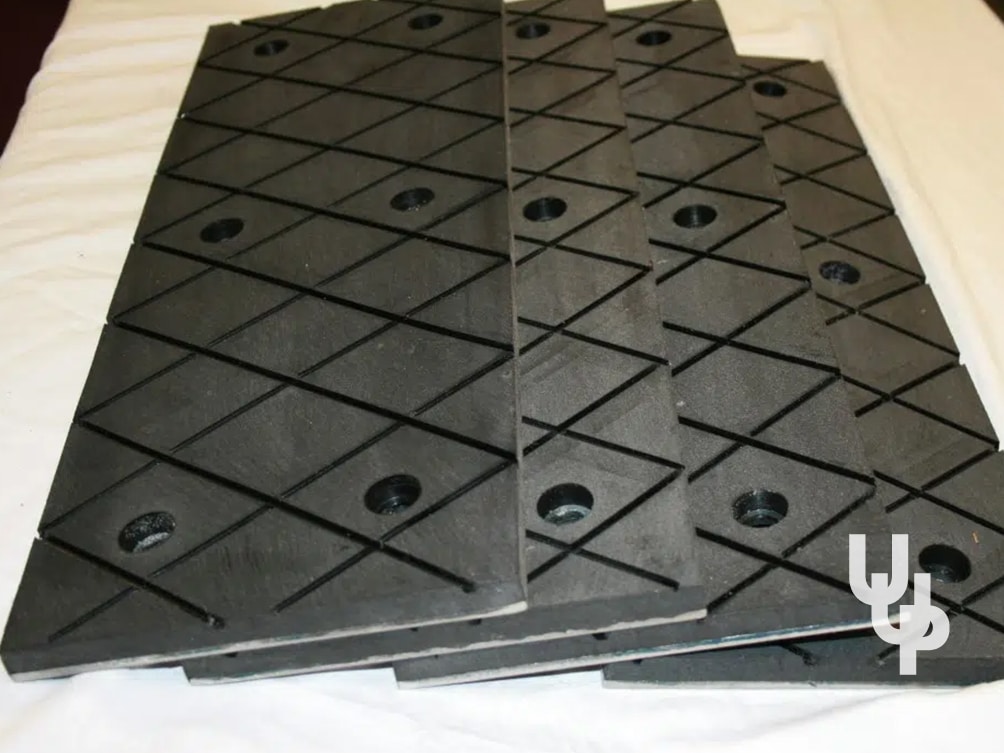
Energy Absorption vs Rebound
Urethane pads dissipate impact energy as heat (cushioning loads) while elastically returning to shape (rebound) after each hit. Balancing energy absorption vs. rebound is a key design trade‑off. Softer durometers absorb more energy (greater damping) but deform more under load, whereas harder durometers deflect less and return more force (higher rebound). In other words, soft (50–60A) pads maximize impact damping, while hard (>80A) pads behave more like rigid springs with minimal bounce.
Durometer (Hardness) Selection
Choosing the right hardness is critical. In general, lower Shore A durometers are commonly used for impact/vibration pads to maximize shock absorption. Typical ranges are:
- 50–60A (Soft): Very elastic urethane providing maximum cushioning and energy absorption for shock‑absorbing urethane pads. Ideal for high‑impact or vibration‑damping mounts.
- 70–85A (Medium): Balanced flexibility and strength, used in applications like rollers or wheels that need both traction and impact resistance. Offers moderate cushioning with greater load capacity.
- >80A (Hard): Very stiff with minimal rebound, best for heavy static loads or wear-critical parts. These grades transmit force more than they absorb it, so they are selected for load support and abrasion resistance.
Universal Urethane can cast pads across a broad hardness range (about 20A up to 70D Shore). Soft grades absorb impact and reduce stress on equipment, while harder grades maximize stiffness under load. Engineers should choose the lowest durometer that meets load and wear requirements: pads softer than ~70A excel at damping, whereas pads above 80A Shore A (or Shore D) are used when strength and durability are the priority.
Pad Thickness and Profile: Universal Urethane manufactures impact pads with precise thickness and surface profiles to meet each application. Pads can be flat or include custom patterns (ribbed, grooved, diamond‑knurled, etc.) as shown above, which help distribute load and enhance grip or damping. Universal holds pad flatness and thickness to tight tolerances, and stock sheet material is offered in many thicknesses (up to several inches). For example, cast sheet is available up to 4″ thick (±2% tolerance), so pads can be made thick enough to provide the needed travel without bottoming out. In general, thicker pads allow more deflection and energy absorption (useful for high impacts), while thinner pads fit into space‑limited areas with higher stiffness. Universal can also bond urethane pads to metal backing plates for secure mounting.
Environmental Considerations
Urethane impact/damping pads perform reliably in harsh conditions. Standard cast urethanes operate roughly from –30 °C to +100 °C without significant loss of properties. They inherently resist oils, solvents, and moisture, making them suitable for steel mills, mining, automotive, and other industrial settings. However, service extremes should guide material choice: harder durometers and ether‑based chemistries are more oil‑/chemical‑resistant, while ester grades excel in general durability. In practice, always specify the pad compound and hardness to match the temperature and chemical exposure. Universal’s engineers will recommend the appropriate polyurethane formulation and hardness so that the pad delivers consistent damping and rebound performance under the expected environmental stresses.
Contact Us
Request a Quote